
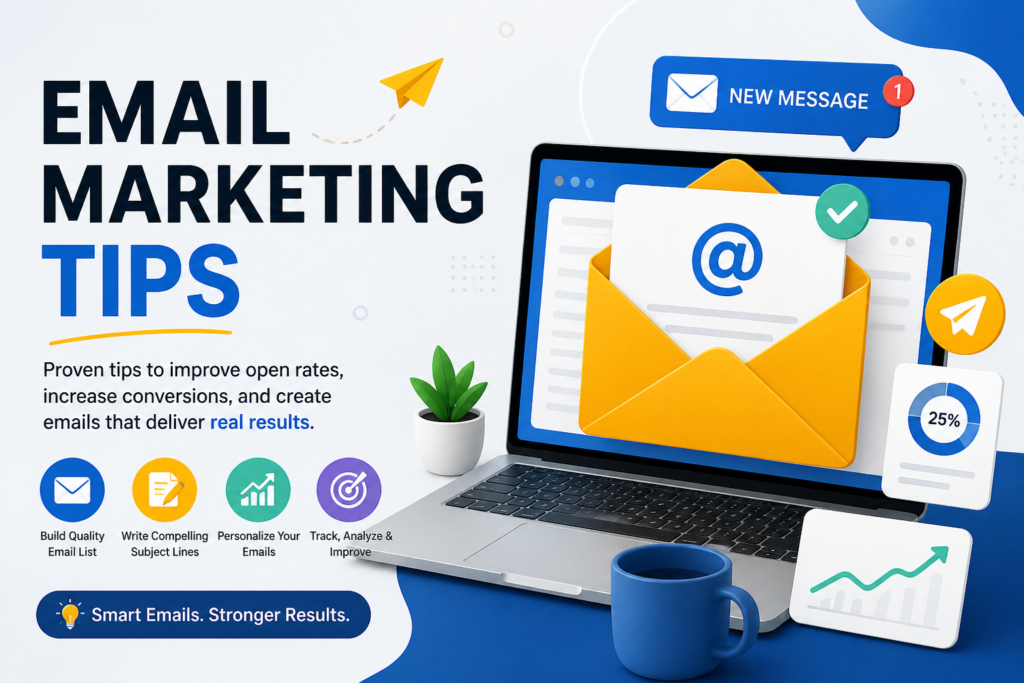
One of the best digital marketing techniques for companies of all sizes is email marketing. It enables you to establish a personal connection with your audience, cultivate relationships, and advertise your goods or services. email marketing tips may first seem difficult for novices, but with the correct approach, it can become an effective tool for company expansion.
We’ll provide helpful email marketing advice for novices in this tutorial so you can launch your first campaign and get better outcomes.
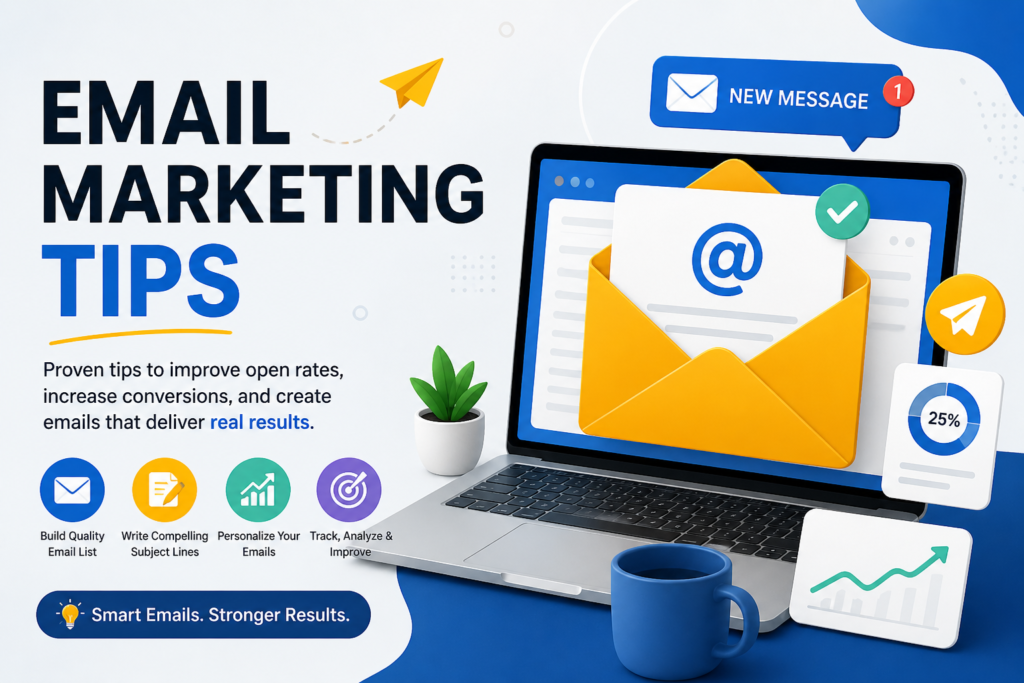
What Is Email Marketing?
We’ll provide helpful email marketing advice for novices in this tutorial so you can launch your first campaign and get better outcomes.
Email is a dependable marketing channel since it allows you direct access to your audience’s mailbox, unlike social media, where algorithms regulate your reach.
Why Email Marketing Is Important
Before learning the tips, it is important to understand why email marketing matters.
- Cost-effective: Email marketing is affordable compared to paid advertising.
- Direct communication: It allows you to reach your audience personally.
- High ROI: Email marketing often delivers better returns than many other channels.
- Builds customer loyalty: Regular emails help maintain customer relationships.
- Increases conversions: Targeted emails can drive more sales and engagement.
For beginners, email marketing is one of the easiest ways to build a long-term relationship with potential customers.
1. Build a Quality Email List
The first step in email marketing is building an email list of interested subscribers. A strong list is more valuable than a large list of uninterested people.
Here are some ways to grow your email list:
- Add signup forms on your website
- Offer free resources like eBooks or discounts
- Use pop-ups for newsletter subscriptions
- Promote your email list on social media
Avoid buying email lists. Purchased lists often contain inactive users and can damage your sender reputation.
A high-quality email list increases open rates and engagement, making your campaigns more effective.
2. Choose the Right Email Marketing Platform
Using an email marketing tool makes it easier to create, send, and track emails. Popular platforms include:
- Mailchimp
- Brevo
- ConvertKit
- MailerLite
These tools help automate your campaigns, manage subscribers, and track performance metrics like open rates and clicks.
Beginners should choose a platform that is easy to use and offers automation features.
3. Understand Your Audience
To create effective emails, you need to understand your audience’s interests and needs.
Ask yourself:
- What problems are they facing?
- What type of content do they want?
- What products or services interest them?
Segmenting your email list based on user behavior or interests helps you send relevant messages to the right people. Personalized emails perform better because they feel more relevant to the reader.
4. Write Attention-Grabbing Subject Lines
Your subject line is the first thing people see, so it needs to capture attention.
Here are some tips:
- Keep it short and clear
- Create curiosity
- Use action words
- Highlight benefits
- Avoid spammy language
For example:
- “5 Easy Email Marketing Tips for Beginners”
- “Start Email Marketing the Right Way Today”
- “Boost Your Sales with These Email Marketing Tips”
A strong subject line can improve your email open rates significantly.
5. Focus on Valuable Content
People open emails because they expect value. If your emails are only promotional, subscribers may lose interest.
Provide useful content such as:
- Helpful tips
- Industry updates
- Product recommendations
- Special offers
- Educational guides
When your emails solve problems or provide useful information, subscribers are more likely to engage with your brand.
6. Keep Your Emails Simple and Clear
Beginners often make the mistake of adding too much information to one email. Simple emails perform better because they are easier to read.
Best practices include:
- Use short paragraphs
- Add clear headings
- Include one main message
- Use a clear call to action
For example, if your goal is to encourage subscribers to read a blog, your CTA could be:
“Read the Full Guide”
A simple email design improves readability and engagement.
7. Optimize for Mobile Devices
Many users read emails on smartphones. If your email is not mobile-friendly, readers may leave without taking action.
To optimize for mobile:
- Use responsive templates
- Keep subject lines short
- Use readable fonts
- Make buttons easy to click
Mobile-friendly emails improve user experience and increase click rates.
8. Test Before Sending
Always test your emails before sending them to your full list.
Check:
- Subject line
- Email formatting
- Broken links
- Images
- Mobile appearance
Testing helps you catch mistakes that could affect your campaign performance.
9. Use Automation
Automation saves time and improves consistency. You can set up automated emails for:
- Welcome messages
- Follow-up emails
- Abandoned cart reminders
- Promotional sequences
For example, when someone subscribes, an automated welcome email can introduce your brand and encourage engagement.
Automation ensures your subscribers receive timely communication without manual effort.
10. Track and Improve Performance
After sending emails, review the results to understand what works.
Important metrics include:
- Open Rate: Percentage of people who opened your email
- Click-Through Rate: Percentage who clicked your link
- Conversion Rate: Percentage who completed your goal
- Unsubscribe Rate: Percentage who left your list
Analyzing performance helps you improve future campaigns.
For example, if open rates are low, improve your subject lines. If clicks are low, improve your content or CTA.
Common Email Marketing Mistakes to Avoid
Beginners should avoid these common mistakes:
- Sending too many emails
- Ignoring personalization
- Using misleading subject lines
- Not testing emails
- Buying email lists
Avoiding these mistakes will help you build trust with your audience and improve campaign results.
Final Thoughts
Learning email marketing as a beginner may take time, but it is one of the most valuable digital marketing skills you can develop. By building a quality email list, creating useful content, writing better subject lines, and tracking performance, you can create successful campaigns that grow your business.
Start simple, focus on delivering value, and improve with each campaign. Over time, your email marketing efforts will generate better engagement, stronger customer relationships, and higher conversions.
If you apply these email marketing tips for beginners consistently, you will build a strong foundation for long-term marketing success.