
In the modern business world, digital marketing is no longer an option; it is necessary for growth. The future belongs to those who are prepared to innovate, adapt, and effectively engage their target audience. The answer is not as simple as choosing one over the other. Both have their advantages and disadvantages. In this blog, we will look at how AI vs Human Content compare and what performs best in today’s digital environment.
What is AI-Generated Content?
The answer is not as simple as choosing one over the other. Both have their advantages and disadvantages. In this blog, we will look at how AI and human content compare and what performs best in today’s digital environment.
AI is trained on vast amounts of data, allowing it to identify trends and give relevant information rapidly.
‘
Benefits of AI Content
AI is trained on vast amounts of data, allowing it to identify trends and produce relevant content rapidly.
AI is also cost-effective. Instead of hiring multiple writers, businesses can use AI tools to reduce costs.
Consistency is another benefit. AI can maintain a consistent tone and style across all articles.
AI is also useful for idea generation. It can suggest topics, outlines, and headlines, which can save time and effort.
Limitations of AI Content
Despite these benefits, AI content has limitations. It frequently lacks inventiveness and emotional depth. AI can’t fully comprehend human emotions, experiences, or cultural nuances.
If not properly edited, AI-generated content can sound generic or repetitious. It can sometimes produce inaccurate or out-of-date information.
Another limitation is creativity. While AI can generate content rapidly, it may not necessarily offer novel insights or views.
What is Human-Created Content?
Writers, marketers, and artists use their knowledge, creativity, and experience to create content.
Human writers comprehend emotions, storytelling, and audience behavior, making their material more relatable and engaging.
Benefits of Human Content
The biggest strength of human content is creativity. Humans can create unique ideas, tell stories, and connect emotionally with the audience.
Human-generated content is also more authentic. It reflects real-world experiences, opinions, and ideas that artificial intelligence cannot imitate.
Another benefit is adaptability. Human writers can change tone, style, and messaging depending on the audience and situation.
Human content also builds trust. People are more likely to connect with content that feels real and genuine.
Limitations of Human Content
Human content requires time to generate. Writing high-quality content involves research, creativity, and editing.
It may also be more expensive, particularly if you engage professional writers or agencies.
When there are numerous writers participating, consistency might be difficult to maintain.
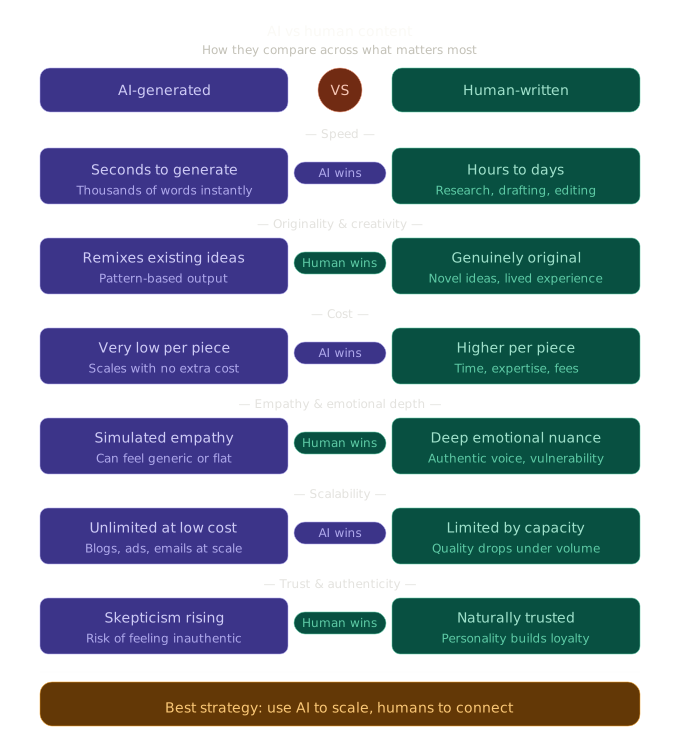
AI vs Human Content: Key Differences
Human content requires time to generate. Writing high-quality content involves research, creativity, and editing.
It may also be more expensive, particularly if you engage professional writers or agencies.
When there are numerous writers participating, consistency might be difficult to maintain.
What Works Better in 2026?
In today’s digital world, the best approach is not choosing between AI and humans but combining both.
AI can be used for:
- Developing concepts and outlines
- Creating initial drafts
- Managing repetitious content tasks.
Humans can focus on:
- Adding creativity and storytelling.
- Editing and improving content
- Ensure correctness and originality.
This combination allows businesses to create high-quality content efficiently.
The Importance of Quality Over Quantity
Quality is most important, regardless of who generates the information. Search engines and users both value information that is useful, informative, and interesting.
Low-quality material, whether generated by AI or humans, will not yield results. Concentrate on delivering value to your audience.
Future of Content Creation
Artificial intelligence will continue to improve and advance. However, human creativity and emotional intelligence will remain crucial.
Businesses who learn to balance AI efficiency and human creativity will have a significant advantage.
Conclusion
AI vs. human content is a cooperation, not a competition. AI provides speed and efficiency, whereas humans contribute originality and authenticity.
Combining the two yields the best outcomes. Use AI to save time and increase productivity, while relying on human experience to create meaningful and compelling content.
Ultimately, the idea is to provide value to your audience. Whether you use AI, humans, or both, focus on creating content that informs, engages, and builds trust.