
In today’s digital landscape, the most compelling marketing often doesn’t come from brands themselves—it comes from their customers. User-generated content (UGC) has evolved from a nice-to-have to a critical component of current marketing tactics, providing authenticity that traditional advertising just cannot match.
User-generated content is any content—photos, videos, reviews, testimonials, and social media posts—created by customers rather than brands. This information has intrinsic credibility because it represents authentic experiences from real people, making it extremely helpful for increasing trust and engagement.
Let’s look at four exceptional instances of brands that have successfully used user-generated content to strengthen communities, raise brand recognition, and deliver substantial financial results.
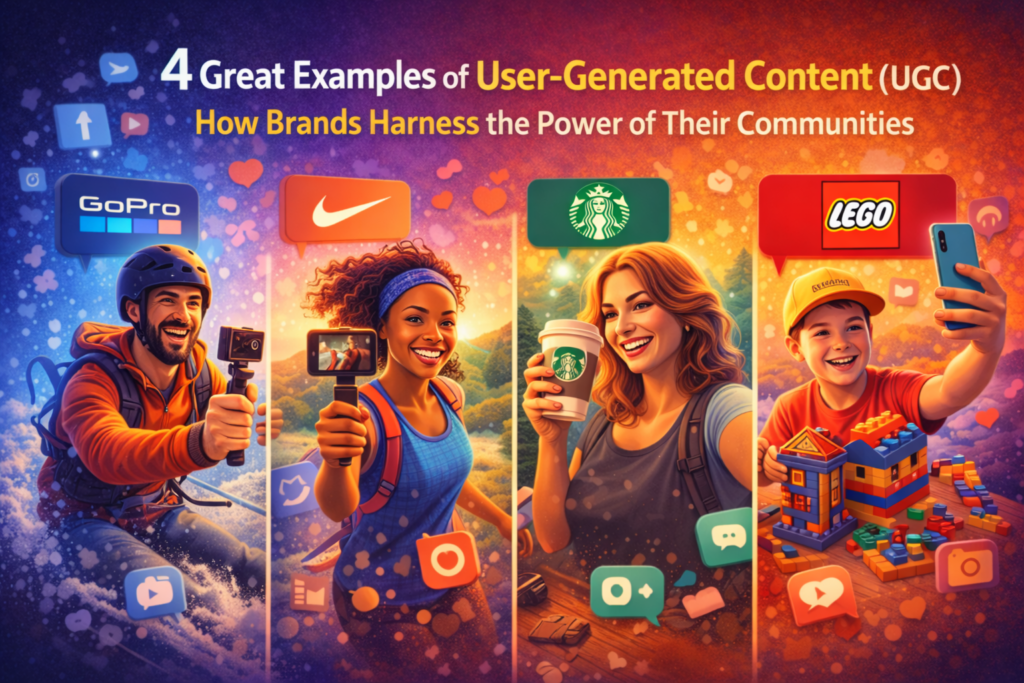
1. GoPro: Turning Customers into Content Creators
Perhaps no brand has perfected user-generated content as well as GoPro. The action camera firm has based its whole marketing strategy on its customers’ adventures and experiences, transforming everyday users into brand ambassadors and video creators.
The Strategy
GoPro’s strategy is ingeniously simple: their equipment is meant to capture remarkable moments, and the firm offers a variety of venues for consumers to share them. The GoPro Awards program incentivizes users to submit their best footage by offering cash prizes and the opportunity to be featured on GoPro’s official channels.
The brand aggressively curates and distributes customer material across its social media platforms, website, and even traditional advertising efforts. Some of the most breathtaking GoPro footage you’ve seen in commercials wasn’t shot by professional filmmakers—it was captured by surfers, skydivers, mountain bikers, and adventure enthusiasts around the world.
Why It Works
GoPro’s User-Generated Content (UGC) strategy is successful because it showcases the product’s capabilities in real-world circumstances. When potential buyers watch average folks recording spectacular film while surfing enormous waves or skiing down mountains, it significantly outperforms any planned campaign. The content sells more than just a camera; it offers a lifestyle and the opportunity to chronicle your own adventures.
Furthermore, this strategy generates a virtuous cycle in which people buy GoPro cameras to create shareable material, which drives others to buy cameras and join the community. The brand has created an environment in which content creation and sharing are integrated into the product experience.
The Results
GoPro’s YouTube channel has nearly 11 million subscribers, with the majority of the video coming straight from consumers. The company has successfully outsourced much of its content development while cultivating an engaged audience that actively supports the brand. This strategy has enabled GoPro to maintain its position as the leading action camera brand in the face of increased competition.
2. Starbucks: The White Cup Contest and Seasonal Campaigns
Starbucks has historically excelled in leveraging user-generated content, with campaigns that engage millions of customers and generate significant social media discussion. Their method demonstrates how even traditional retail businesses may leverage User-Generated Content (UGC) innovation.
The Strategy
In 2014, Starbucks ran one of its most famous user-generated content initiatives, the White Cup Contest. Customers were urged to draw on their famous white Starbucks cups and share images of their designs on social media using the hashtag. #WhiteCupContest. The winner design would be printed on a limited edition Starbucks cup.
Aside from one-time efforts, Starbucks has made user-generated content (UGC) a consistent aspect of its strategy. The firm frequently encourages customers to post images of their drinks, particularly seasonal options such as the Pumpkin Spice Latte or holiday beverages. These pictures, which frequently include meticulously designed coffee cups in visually appealing surroundings, have become a cultural phenomenon.
Why It Works
Starbucks’ User-Generated Content (UGC) initiatives succeed because they capitalize on customers’ previous activity. People were already shooting and sharing their Starbucks beverages on social media; the firm simply codified and encouraged this behavior. By creating specific hashtags and contests, Starbucks channeled this organic activity into branded campaigns.
The White Cup Contest was particularly effective because it turned a discarded item into a canvas for creativity. It instilled in customers a sense of ownership and participation in the business, making them feel like collaborators rather than consumers. The minimal entry barrier—only a cup and a pen were required—meant that anyone could take part.
The Results
In just three weeks, the White Cup Contest attracted approximately 4,000 entries and numerous social media impressions. More importantly, it received extensive media attention, with outlets ranging from USA Today to Mashable highlighting the campaign. The contest cost little to run but resulted in massive brand publicity and engagement.
Starbucks-related hashtags now produce millions of postings each year, giving the brand with an inexhaustible source of original content that shows off their products in real-world contexts. This content acts as social proof for potential customers, demonstrating how Starbucks fits into their regular routines and special occasions.
3. Airbnb: Community-Driven Travel Inspiration
Airbnb has transformed not only the hotel business, but also the way travel marketers may employ user-generated content. The site feeds on content provided by both hosts and visitors, forming a whole ecosystem around unique travel experiences.
The Strategy
Airbnb’s whole business strategy is based on user-generated content (UGC); hosts publish listings with photographs and descriptions of their apartments, and visitors leave reviews and ratings. However, the company takes this a step further by running social media advertisements encouraging people to report their Airbnb experiences.
The firm frequently showcases gorgeous images shot by guests visiting Airbnb rentals, highlighting unique lodgings ranging from treehouses to castles, beach bungalows to urban lofts. The company has built a visual archive of authentic travel moments through initiatives like #AirbnbPhotoContest and continual encouragement to submit experiences using hashtags like #Airbnb.
Airbnb also promotes guest stories and experiences on its platform and social platforms, emphasizing how their service allows for unique travel experiences that traditional hotels cannot provide. These anecdotes, delivered in the passengers’ own words, elicit emotional responses and encourage others to seek unconventional lodgings.
Why It Works
Airbnb’s User-Generated Content (UGC) strategy succeeds because it addresses the primary concern potential customers have: trust. Staying in a stranger’s home requires a leap of faith, and user-generated reviews, photos, and stories provide the social proof needed to make that leap. When potential guests see real photos from previous visitors and read their authentic experiences, it builds confidence in the platform.
The diversity of user-generated content highlights the enormous range of experiences accessible on Airbnb, from low-cost rooms to luxury villas, metropolitan apartments to rural retreats. No single marketing effort could capture the range of material provided by millions of users throughout the world.
The Results
Airbnb has built a community of brand champions who openly discuss their experiences. Over 1 billion guest arrivals have occurred through the platform, each of which represents a potential source of user-generated content. The company’s Instagram feed, which largely features user material, has over 5 million followers and provides continual inspiration for travelers planning their next vacation.
4. Apple: Shot on iPhone Campaign
Apple’s “Shot on iPhone” campaign is one of the most successful user-generated content projects in recent marketing history, elevating smartphone photography to an art form while highlighting the iPhone’s camera capabilities.
The Strategy
The “Shot on iPhone” initiative, which began in 2015, invites iPhone owners to submit their best photos taken with their iPhones. Apple selects these contributions and displays them on billboards, print commercials, their website, and social media platforms. The campaign has a global reach, with localized versions starring photographers from many locations.
This advertisement’s curating process is quite smart. Apple does not accept just any photo; they choose images that compete with professional photography in terms of composition, lighting, and artistic worth. This selective method ensures that each piece of user-generated content retains Apple’s premium brand image.
The campaign has evolved to include video content as well, with short films shot entirely on iPhone showcasing the device’s video capabilities. Apple often partners with professional filmmakers who push the iPhone to its limits, demonstrating what’s possible with the technology.
Why It Works
The “Shot on iPhone” marketing effectively showcases product capabilities through authentic use cases. Rather than listing technical specifications about megapixels and aperture sizes, Apple shows potential customers what they can actually create with an iPhone camera. The message is clear: you don’t need professional equipment to take stunning photographs.
This strategy also democratizes creation. By showcasing both amateur and expert photographers, Apple implies that anyone with an iPhone may record beautiful moments. It elevates the iPhone from a simple communication gadget to a creative tool, giving emotional value to the purchasing decision.
Furthermore, getting featured in an Apple commercial is a great honor for photographers. This reputation encourages users to contribute their best work and inspires others to improve their iPhone photography talents, resulting in an ever-increasing pool of high-quality photos.
The Results
The campaign has produced billions of impressions worldwide and has become one of Apple’s most well-known marketing endeavors. It has inspired numerous hashtags, photography competitions, and community conversations about iPhone photography approaches. The marketing has also changed people’s perceptions of smartphone cameras, elevating them from useful tools to genuine photographic instruments.
Apple’s strategy has been extensively adopted by competitors, albeit few have reached the same level of quality curation and worldwide influence.
Key Takeaways for Leveraging UGC
These four examples demonstrate numerous key aspects for effective user-generated content initiatives. First, the best UGC campaigns are in sync with consumer behavior and product usage—they encourage people to do what they already want to do. Second, giving explicit incentives, such as contests, recognition, or community membership, increases involvement. Third, quality curation ensures that UGC meets brand standards while being authentic. Finally, effective brands do more than merely collect user-generated content; they celebrate it, recognizing creators and making them feel valued.
User-generated content is the future of real marketing. In an era when consumers increasingly reject traditional advertising, user-generated content (UGC) provides the credibility and relatability required to foster true connections between businesses and their audiences.
Similar Blogs
Digital Marketing vs Performance Marketing. read now